
THE AGENCY GROWTH CLUB
How to Get 9 MILLION LinkedIn Views With This Custom GPT
The BRAIN Framework
If you scroll through LinkedIn these days, it looks like 90% of people are using AI wrong. The content is generic, the tone is robotic, and it’s obvious very little thought went into the prompt.
As agency owners, we know we need to leverage AI for efficiency, but we cannot afford to sacrifice quality or brand voice.
In the latest episode of the Agency Growth Club, I sat down with Mary-Anne, someone I consider the “Queen of AI Content.” I’ve been sending her short-form videos to my own team for the last six months saying, “Guys, we need to get on this.”
MaryAnne recently cracked the code on viral AI content, generating 9 million impressions on LinkedIn with a single video scripted by a Custom GPT.
But it wasn’t a magic prompt. It was a rigorous system.
In this episode, MaryAnne broke down exactly how she builds AI “brains” to clone herself, why most agencies are falling into the “vibe coding” trap, and the tools she uses to run her agency efficiently.
Here are the best takes from our conversation.
1. Stop Asking AI to “Act Like an Expert”
When AI first hit the scene, MaryAnne, like many of us, tried the standard prompting advice: “Act like a viral video scriptwriter and write me a script about X.”
The results were inconsistent, rubbish, and often based on outdated information.
“If you give it a brain, then it can do work to your standard,”
MaryAnne explains. She realized she couldn’t outsource the thinking to AI, only the execution.
To get that 9-million-view result, she didn’t use a magic prompt. She fed a Custom GPT six years of her own best-performing video scripts, analyzed the patterns, and created a framework based on her actual day-to-day work.
2. The “BRAIN” Framework for Cloning Yourself
The biggest takeaway from this episode is MaryAnne’s methodology for ensuring AI produces work that sounds like her and adheres to her agency’s standards. She calls it the BRAIN framework.
If you want to clone yourself or your senior staff, you need to build this architecture before prompting:
B – Brand Assets: Load in vision, mission, value propositions, and detailed target avatars.
R – Request Frameworks (SOPs): The step-by-step process of how you execute a task (e.g., a video script structure, an SEO checklist).
A – AI Instructions: Directives that tell the AI how to interact with the other documents.
I – Interaction Directives: The prompt sequencing. Crucially, this includes asking the AI to score itself against your framework before delivering the final output.
N – Next Level Examples: Feeding the system your best historical work (like that 9-million-view video) so it knows what “great” looks like.
3. The Danger of “Vibe Coding”
There is a massive misconception that AI replaces the need for senior talent. MaryAnne shared a cautionary tale about a client who hired a cheap developer using AI to build a project for one-third of her agency’s price.
Two months later, the client came back. The front end looked okay, but the back end was broken. The cheap developer had just let AI write code without understanding the underlying architecture, something they now call “Vibe Coding.”
“Yes, you can get AI to do the job,” MaryAnne says. “But if you don’t really know what’s good and what’s bad… the system is going to break.”
You need human expertise to QA the AI’s output. If you don’t know what good copy looks like, you can’t judge if ChatGPT did a good job.
4. Good SEO is Good GEO
Search is changing rapidly with the rise of LLMs and AI overviews. MaryAnne’s take on how agencies get found in this new era is refreshing: don’t chase snake oil tools promising to rank you in ChatGPT.
Instead, focus on brand consistency.
“Good SEO is good GEO,” she notes. LLMs work on word association. If you want to be cited as an expert in “Korean Skincare,” you need to ensure your brand name appears consistently next to that phrase across podcasts, PR, social media, and your website.
Build a consistent knowledge base across the web that the AI can reference.
MaryAnne’s AI Tech Stack
Mary-Anne isn’t just theorizing; she’s using these tools daily to run her agency efficiently. Here are a few she shouted out during the episode:
Whisper Flow: She rarely types emails anymore. This dictation tool cleans up ums, ahs, and formats text perfectly.
Guide: A game-changer for SOPs. If you do a repetitive task, turn this on. It records every click and automatically generates a step-by-step document you can feed into AI.
NotebookLM: Google’s free tool. Great for uploading massive amounts of internal documents (like brand guidelines or regulations) to fact-check content against.
Fathom: An AI meeting notetaker that she integrates with Zapier to automatically pull action items directly into her project management software (Asana).
The Final Word
The difference between agencies that will thrive with AI and those that will get “vibe coded” out of existence is the input.
If you are willing to do the hard work upfront—codifying your knowledge, building your frameworks, and training the AI on your standards, you can achieve massive scale. If you just want a quick fix from a generic prompt, you’ll get generic results.
To hear the full breakdown of the 9-million-view story and deep dive into the BRAIN framework, watch the full episode on YouTube.
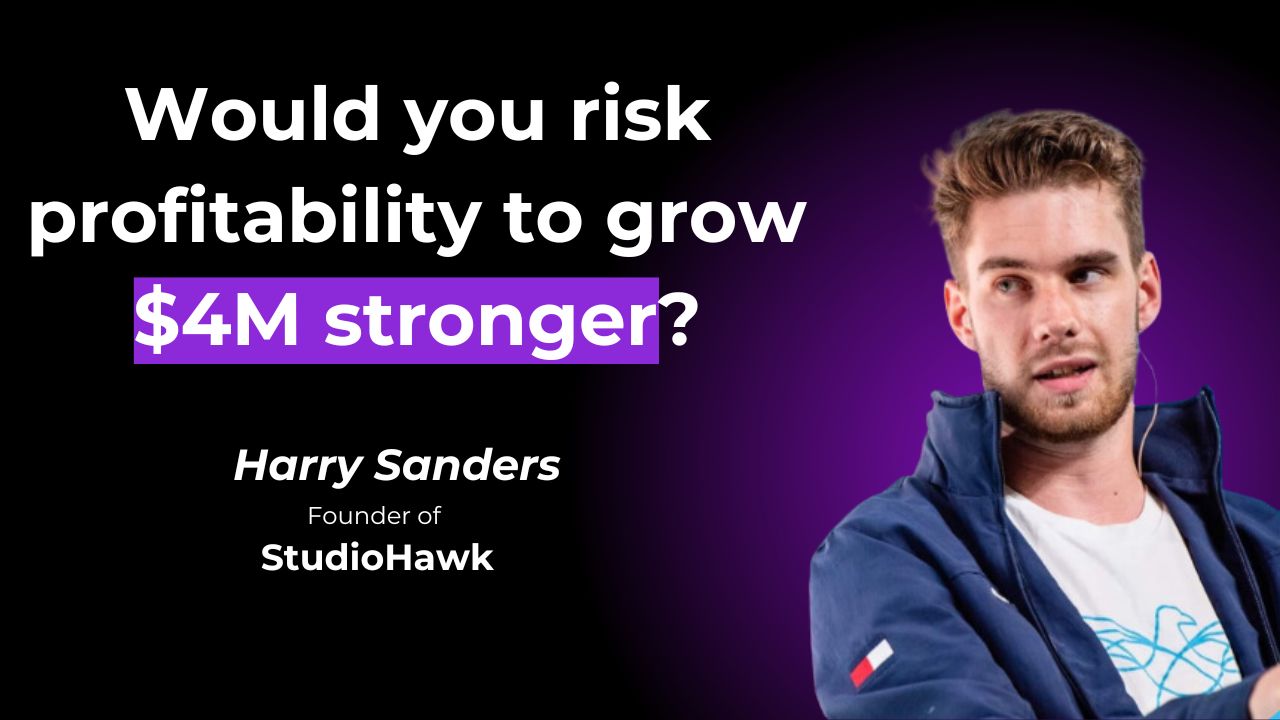
Would You Risk Profitability to Grow $4M Stronger?
Harry has built one of the most formidable SEO agencies, adding $4M in Australian revenue this year while expanding into the US. With a team of 70 strong, we dive into the setbacks, lessons, and strategies that fuelled Harry and Studiohawk’s exceptional success.
Our Guest: Harry Sanders, Founder of Studiohawk
28 minute listen