
THE AGENCY GROWTH CLUB
The "Solopreneur Ceiling" (And How to Break Through It)
From Solo Consultant to Scalable Agency: Lessons on Hiring, Delegation, and Growth
If you’re a solo consultant or small agency owner, there’s usually a moment when things start to feel fragile.
You’re delivering the work, managing clients, handling sales, and solving problems all at once.
The business depends entirely on you.
And the second life throws something unexpected your way, everything slows down.
That’s exactly where Kevin Kapezi, founder of Growthack, found himself.
In this episode of Agency Growth Club, Kevin shares how he transitioned from being a solo consultant to building a small, high-performing agency team, and what that journey taught him about hiring, delegation, content, and positioning.
His story is a familiar one for many founders and offers practical lessons for anyone trying to move from survival mode into sustainable growth.
The Hidden Risk of Building Alone
Kevin’s turning point came during what he describes as a perfect storm.
- His son had just been born
- He was in the middle of a major website migration
- His co-founder exited the business at the same time
Client work still needed to be delivered, but suddenly all responsibility sat with him.
That experience made something painfully clear.
When you’re a solo consultant, you are the single point of failure.
You handle delivery, strategy, and communication. If something happens in your personal life, your clients feel it immediately.
For Kevin, this was the moment he realised the business needed to evolve. He didn’t want to go back to working for someone else, so the only option was to build something more resilient. That meant bringing in people and creating a team that could carry delivery forward, even when he couldn’t.
Letting Go of Being the Expert
One of the hardest shifts Kevin had to make was stepping away from being the source of knowledge.
As a solo consultant, clients come to you because you’re the trusted expert. You hold the context, make the decisions, and drive the outcomes.
When you start hiring, that changes.
You have to trust other people to own parts of the work and become the experts in their own areas.
Kevin describes this as the biggest mindset change of all. Instead of being the consultant, he had to become the leader. That meant accepting that not everything would be done exactly his way and learning to empower others to take responsibility for results.
Over time, this created a stronger delivery model.
Kevin focuses on strategy and alignment with client goals, while his team brings deep technical and content expertise. Clients benefit from multiple specialists instead of a single overextended founder.
Why Delegation Feels so Uncomfortable
Delegation is something almost every agency founder struggles with, especially in the early stages. When you’ve built everything yourself, it’s natural to hang onto the tasks you believe you do best.
You know you can move faster on your own.
You know your standards.
Letting go feels risky.
Kevin admits this was one of his biggest challenges. His first senior hire had a similar personality and background, which initially caused friction. Both were used to doing things independently, and both had strong opinions on how work should be handled.
What helped was time, trust, and documentation.
Kevin started focusing on building confidence between teammates and creating clear processes around how the agency works. By documenting workflows and expectations, new hires could understand not just what to do, but how Growth Act approaches delivery. This reduced confusion, sped up onboarding, and helped everyone align more quickly.
He also embraced the idea that aiming for 80% is better than chasing perfection.
Trying to get everything done exactly your way keeps you trapped in the weeds. If someone can deliver most of the outcome well, that’s a win. The remaining 20% improves over time as trust and experience grow.
Hiring for Alignment, Not Just Skills
Kevin is open about how difficult hiring really is:
You can run multiple interviews, check references, and follow every best practice, but you still won’t truly know how someone performs until they start.
The difference between his unsuccessful hire and his strongest hire came down to alignment.
His best hire proactively spoke about personal values, growth goals, and how they wanted to develop. Those ambitions aligned naturally with where Growth Act was heading. That made everything easier. They showed up on time, stayed committed, and cared deeply about the mission.
Kevin believes this is especially critical in the early stages. The first few people you bring into a business set the tone for everything that follows. If you hire people who aren’t aligned, even future A players may question whether the environment is right for them.
He also advises founders to pay attention to “orange flags” during interviews.
These aren’t deal-breakers, but small signals that something might be off. Rather than ignoring them, dig deeper. Most hiring mistakes come from rushing or panic hiring when pressure is high.
Knowing When Your Team is Really Working
There’s a moment every founder remembers, the first time they step away and things don’t fall apart.
For Kevin, it happened when he was sick. Client meetings went ahead without him. Follow-ups were sent. Weekly updates landed in inboxes as usual.
That was the point he realised he’d built something real.
One simple habit that made a huge difference was weekly client update emails.
Short, consistent messages outlining progress and next steps removed uncertainty and kept everyone aligned. It also made account management smoother and strengthened client trust over time.
Looking ahead to 2026
Kevin’s focus moving forward is clarity and consistency.
He’s working on growing the podcast, sharpening the agency’s positioning, and leaning into their “Beyond SEO” message. The goal isn’t rapid expansion, but building a small, aligned team that delivers exceptional work for the right clients.
His journey highlights something many agency owners feel but rarely articulate.
Building a team isn’t just about scaling revenue. It’s about creating resilience. It gives you space to think, removes single points of failure, and allows your business to exist without everything resting on your shoulders.
If you’re still doing everything yourself, this might be your sign.
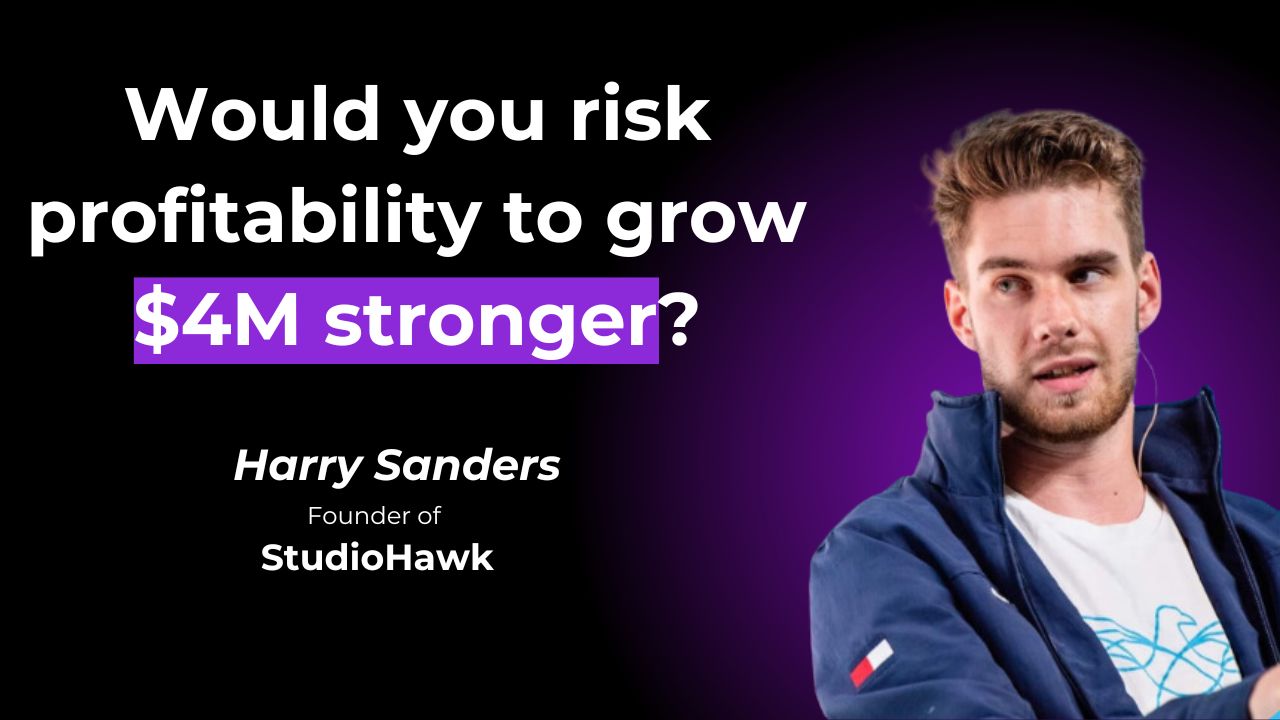
Would You Risk Profitability to Grow $4M Stronger?
Harry has built one of the most formidable SEO agencies, adding $4M in Australian revenue this year while expanding into the US. With a team of 70 strong, we dive into the setbacks, lessons, and strategies that fuelled Harry and Studiohawk’s exceptional success.
Our Guest: Harry Sanders, Founder of Studiohawk
28 minute listen